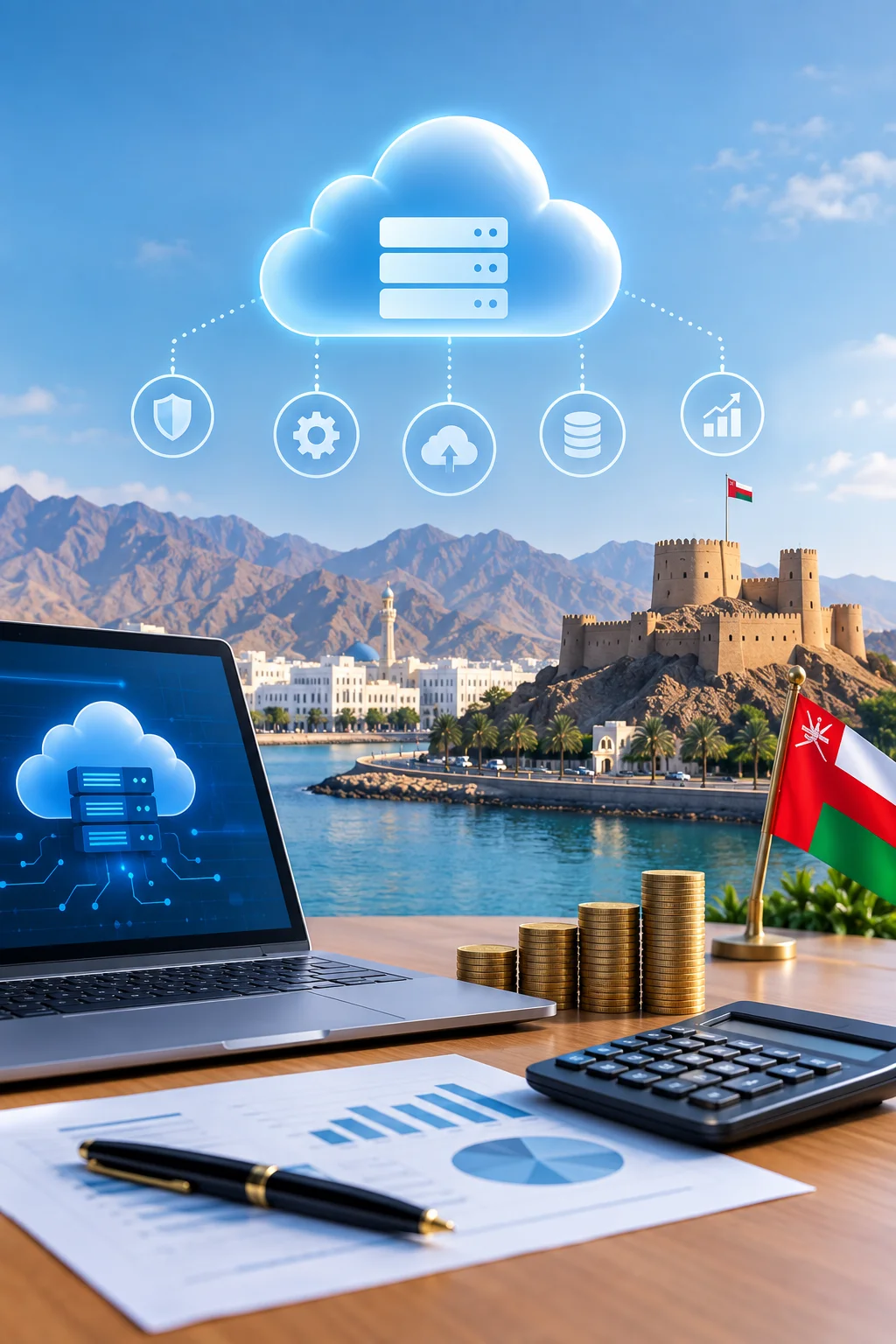

Cloud Solutions in Oman, Built Around Uptime and Compliance
Still running critical systems on a server that’s out of warranty, or scaling a growing team faster than your current IT setup can handle? Lyqa Tech Ventures designs, migrates, secures and manages cloud environments for organizations across Oman – from a single Microsoft 365 rollout for a ten-person office in Muscat to a multi-site hybrid cloud spanning branches in Sohar, Salalah and Duqm.
We are an Omani-owned technology company registered as an SME, working across Muscat, Sohar, Salalah and Duqm. You get one team accountable for the assessment, the migration plan, the execution and the support that keeps your environment running afterward.
When your business needs a cloud strategy, not just a cloud account
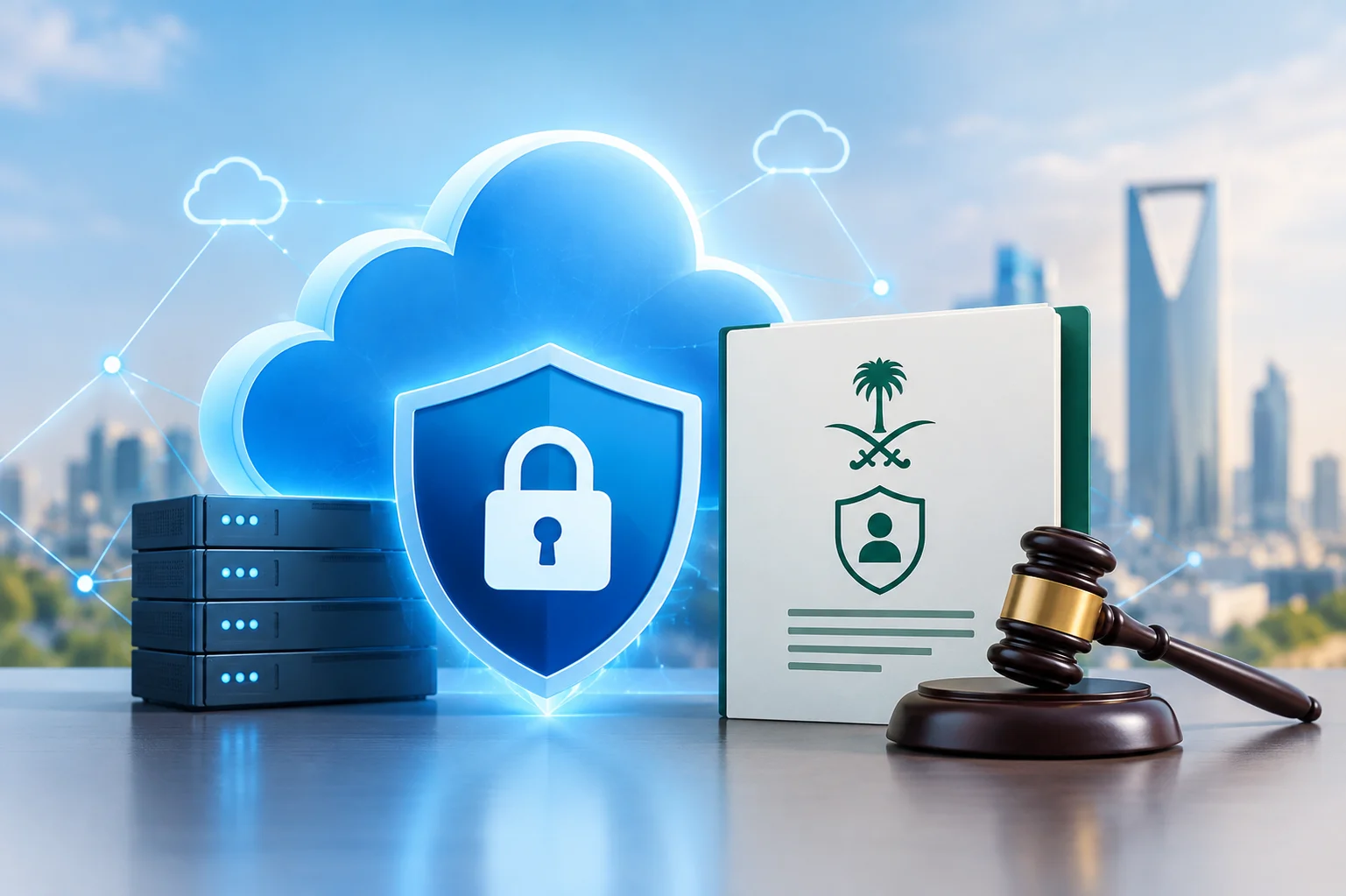
Compliance is governed by the PDPL, not just your IT policy
Many providers pitch cloud migration as a purely technical exercise. That framing misses something that matters the moment your business handles customer, employee or financial data: Oman's Personal Data Protection Law (PDPL), issued under Royal Decree in 2022, sets legal obligations on how personal data is processed, stored and transferred - obligations that apply regardless of which cloud platform you choose. Executive Regulations clarifying the PDPL were issued in early 2024, and organizations were given roughly a year to bring their data handling in line.
What actually determines your cloud architecture
Two requirements catch businesses out after they've already committed to a platform:
Cross-border data transfer needs consent, not just a checkbox. Under the PDPL's implementing regulations, moving personal data outside Oman generally requires the data subject's explicit consent unless the data is anonymized first. If your cloud provider's nearest region is outside Oman, that's a decision to make deliberately, not discover after go-live.
Not all workloads belong in the same place. Government-linked entities, financial institutions and organizations handling sensitive personal data are often expected to keep certain categories of data on infrastructure physically located in Oman. General productivity workloads - email, file sharing, collaboration tools - usually don't carry the same restriction. The right architecture is workload-by-workload, not a single blanket decision.
Where cloud migrations usually go wrong
In our experience the failures are rarely about the cloud platform itself. It's the planning around it: no inventory of which data is personal or regulated before migration starts, backups that were configured but never actually tested with a real restore, access permissions copied over as-is instead of reviewed, a legacy application nobody flagged until it broke post-migration, or a go-live with no rollback plan if something didn't work.
Cloud services we deliver and manage
Public Cloud (AWS, Microsoft Azure, Google Cloud)
Fully managed compute, storage and services on a global hyperscaler platform, billed on usage rather than upfront hardware. For businesses that need to scale up or down without capital spend on servers - seasonal retail, growing SaaS teams, or offices adding headcount faster than a server room can keep up - this is usually the right starting point, provided the workload doesn't carry a residency restriction.
Private & Oman-Hosted Cloud
Dedicated infrastructure, either on your premises or hosted in an Omani data center, run with cloud-style flexibility instead of being managed as a traditional physical server. This is the fit for organizations with regulated data, government contracts, or a compliance requirement that specific workloads stay inside Oman, without giving up the manageability of a cloud environment.
Hybrid Cloud
Regulated or latency-sensitive workloads stay on private or on-premise infrastructure while everything else - email, collaboration, general applications - runs on public cloud. Most mid-size Omani organizations we work with end up here rather than at either extreme, because very few businesses have data that's uniformly sensitive or uniformly generic.
Cloud Integration with Existing Systems
A cloud migration that ignores what's already running - an on-premise ERP, a local accounting system, a CCTV or access control platform - creates two disconnected environments instead of one working system. Because Lyqa Tech also delivers IT infrastructure, cybersecurity and ELV Services, these integrations are engineered by one team, not negotiated between separate vendors after the fact.
Cloud capabilities for specific risks
Not every business has the same exposure:
Disaster recovery for organizations where downtime has a direct revenue or safety cost - replicated infrastructure that can take over within a defined recovery time if the primary environment goes down.
Ransomware-resistant backup with immutable, offsite copies, so a single compromised admin account can't take out your backups along with your live data.
Data residency-compliant hosting for government, financial and healthcare-adjacent organizations that need specific data categories kept on infrastructure located in Oman.
Multi-branch connectivity linking retail outlets, warehouses or regional offices back to a central cloud environment, so every site works off the same data instead of local silos.
Legacy application migration for older, customized systems that weren't built cloud-native and need re-hosting or re-platforming rather than a simple lift-and-shift.
Public Cloud vs Private / Hybrid Cloud
A straight comparison to help you choose the right starting architecture for your business.
| ☷ Feature | ▣ Private / Hybrid Cloud | ☁ Public Cloud |
|---|---|---|
|
◆
Data Control
|
Full control over physical location and access | Managed within provider's regional infrastructure |
|
⌂
Typical Application
|
Regulated data, government, financial, healthcare-adjacent | General business workloads, growing teams, SaaS-style use |
|
$
Initial Cost
|
Higher upfront setup, especially for on-premise elements | Lower upfront cost, pay-as-you-go |
|
↗
Scalability
|
Scales within provisioned capacity | Scales on demand , usage-based |
|
⚙
Management Responsibility
|
Shared between your team and ours, more hands-on | Largely managed by the platform, lighter overhead |
|
✓
Compliance Fit
|
Straightforward fit for residency requirements | Requires deliberate region and data-handling decisions |
|
↻
Ongoing Cost
|
More predictable, tied to fixed infrastructure | Variable, tracks actual usage |
|
★
Advanced Features
|
Full customization of environment and security posture | Native access to platform-level AI, analytics and automation tools |
Who we work with across Oman
How a Lyqa Tech cloud project runs
Assessment and current-state audit
We review your existing infrastructure, applications, and data - including what's regulated, what's not, and what's simply outdated - to understand what should move and what needs to change first.
Architecture and migration design
platform selection (public, private or hybrid), a phased migration sequence, data classification, and a defined rollback path if something doesn't go as planned.
Compliance and data residency planning
mapping which workloads carry PDPL or sector-specific obligations, and confirming hosting location and data-handling decisions before migration, not after.
Migration execution
moving data, applications and users in planned phases, sequenced around your operating hours to avoid disrupting the business.
Testing, cutover and handover
every migrated system tested before go-live, access and permissions verified, documentation and admin training handed over to your team.
Ongoing management and support
monitoring, patching, backup verification and a local support team you can actually reach when something needs attention.
Request a cloud consultation
Tell us your current setup, approximate user count and whether any of your data is regulated, and we'll tell you what architecture actually fits before we quote anything.
What drives the cost of a cloud solution in Oman
We don't publish fixed prices, because the real number depends on your environment. These are the variables that actually move it:
User and device count - licensing, storage allocation and support scope scale with headcount, not with company size alone.
Data volume and growth rate - storage tier and backup cost track how much data you have and how fast it's growing.
Migration complexity - a straightforward email migration costs far less than moving a customized legacy ERP with years of accumulated configuration.
Compliance and residency requirements - Oman-hosted or private infrastructure carries different cost dynamics than fully public cloud.
Connectivity and bandwidth - reliable, sufficient internet at every site being connected to the cloud environment.
Integration scope - every system the cloud environment needs to talk to adds engineering and testing time.
Support and management level - from basic monitoring to full 24/7 managed service with defined response times.
Designing for connectivity across Oman
Muscat and the main urban centers
Salalah and coastal areas
Sohar and Duqm's sites
Remote or single-link sites
Why Choose Lyqa Tech Ventures for Cloud Solutions in Oman
Omani-owned, Muscat-based, SME-registered - with the standing that carries in government and enterprise procurement.
Systems integrator, not a single-platform reseller - cloud migration is engineered alongside IT infrastructure, cybersecurity and networking, so security and connectivity are built in, not bolted on.
Vendor-agnostic - we recommend AWS, Microsoft Azure, Google Cloud, or a private/hybrid setup based on what your business and your compliance obligations actually require, not a fixed partnership incentive.
One accountable team from assessment to ongoing management, so nobody is between you and a working environment.
Request a cloud consultation
Tell us your current setup, approximate user count and whether any of your data is regulated, and we'll tell you what architecture actually fits before we quote anything.
Frequently Asked Questions
How long does a cloud migration take?
A straightforward email or file migration for a small office can take days. A full migration involving a legacy ERP or multiple sites typically runs several weeks, planned in phases so daily operations aren’t disrupted.
Does moving to the cloud mean our data has to leave Oman?
Not necessarily. General workloads can run on global platforms, but data covered by the PDPL or sector-specific requirements can be architected to stay on Oman-hosted or private infrastructure. We map this out during the assessment phase.
Is the public cloud secure enough for a business handling sensitive data?
Public cloud platforms have strong native security controls, but security depends on how the environment is configured – access controls, encryption and monitoring – not the platform alone. We configure this as part of every migration, and recommend private or hybrid hosting where compliance requires it.
Can you migrate us without downtime during business hours?
Migrations are phased and scheduled around your operating hours specifically to avoid disrupting trading or service delivery, with a defined rollback path if an issue comes up.
Do you support Microsoft 365 and Google Workspace specifically?
Yes – setup, migration and ongoing management for both, alongside broader infrastructure and security work.
What happens if something goes down outside business hours?
Our managed cloud service includes monitoring and support outside standard hours, with response terms confirmed in your service agreement.
Get in Touch
Our vision is to be Oman’s trusted partner for digital transformation.
Visit Us :
Mail Us :
sales@lyqatech.com
Phone Us :
+968 9855 0383