
Kubernetes Security Audit Services in Oman
Not sure whether your cluster would survive a real attack, or just looks fine in the dashboard? Lyqa Tech Ventures reviews Kubernetes environments for businesses and organizations across Oman – configuration, access control, network policy, secrets, images and runtime behaviour – and hands you a prioritized list of what actually needs fixing, not a wall of scanner output.
We are an Omani-owned technology company working across Muscat, Sohar, Salalah and Duqm, delivering this audit as part of a wider cybersecurity and IT infrastructure practice, so findings are read in context of your broader environment, not in isolation.
When a Kubernetes Security Audit Matters
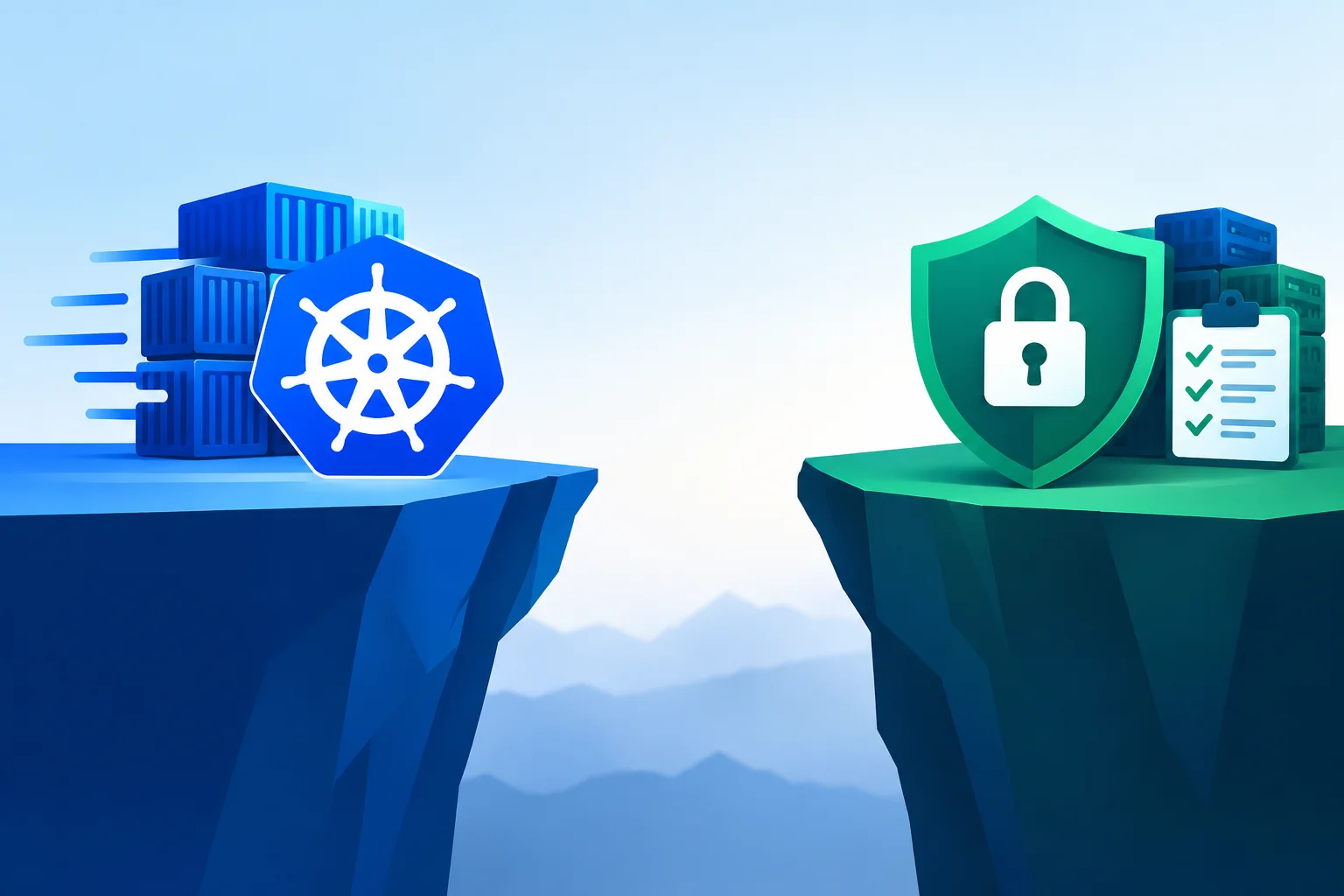
The Gap Between "Running" and "Secure"
A cluster can pass every health check and still be one misconfigured RBAC role or one exposed dashboard away from a full compromise. Kubernetes ships secure-by-default in most managed offerings today, but defaults get overridden the moment real teams add namespaces, service accounts, ingress rules and third-party charts under deadline pressure. An audit exists to catch what accumulated along the way, not to judge the initial build.
The Standards an Audit is Measured Against
There's no single Omani regulator that certifies Kubernetes clusters the way there is for physical fire systems, but organizations are still accountable to whatever framework applies to their sector - ISO 27001 for an information security management system, PCI-DSS if payment data touches the cluster, or a client's own security questionnaire before a contract is signed. On the technical side, the CIS Kubernetes Benchmark is the most widely used configuration baseline, alongside guidance from the cloud provider running the managed control plane (EKS, AKS or GKE).
Where Audits Usually Turn Up Real Problems
In practice, the same handful of issues show up repeatedly: service accounts with cluster-admin bound to workloads that never needed it, secrets stored as plain environment variables instead of a secrets manager, network policies that were never actually applied so every pod can reach every other pod, base images that haven't been rebuilt in months, and no clear answer to "would we notice if someone got in." None of these show up in a basic vulnerability scan - they show up when someone reviews how the cluster is actually configured and used.
What We Review
Cluster and Control Plane Configuration
API server flags, etcd encryption and access, kubelet settings, and admission controller configuration, checked against the CIS Kubernetes Benchmark and provider-specific hardening guidance.
RBAC and Identity
Every role binding and cluster role binding reviewed for least-privilege violations, unused permissions, and service accounts with more access than their workload requires.
Network Policy and Segmentation
Whether namespace isolation and network policies actually restrict pod-to-pod and pod-to-internet traffic, or whether the cluster is flat by default.
Secrets and Credential Handling
How API keys, database credentials and tokens are stored, mounted and rotated, and whether they're recoverable by anyone with basic pod access.
Image and Supply Chain Security
Base image vulnerabilities, registry access controls, image signing, and whether unverified images can be pulled and run at all.
Runtime Behaviour and Detection
Pod security standards, privileged container usage, and whether logging and monitoring would actually surface an intrusion in progress.
Environments that Need Particular Attention
Not every cluster carries the same risk profile:
Multi-tenant clusters, where one team's misconfiguration can expose another team's workloads across shared namespaces.
Hybrid and multi-cloud deployments, where security controls that work on one provider's managed Kubernetes don't automatically carry over to another.
CI/CD-connected clusters, where a pipeline with deploy access is effectively an extension of the cluster's attack surface.
Clusters exposed to the public internet through ingress controllers or load balancers without a clear edge security layer.
Service mesh deployments, where mTLS and traffic policy add real protection only if configured correctly - and add false confidence if they aren't.
Configuration Review vs Penetration Test
Two different questions, both worth asking about the same cluster.
| ☷ Aspect | ▣ Configuration Review | ⌘ Penetration Test |
|---|---|---|
| Question answered | Is the cluster built correctly? | Can someone actually break in? |
| Method | Manual and automated review against benchmarks | Active exploitation attempts in a scoped environment |
| Typical timing | Before go-live, or periodically | After baseline configuration is solid |
| Output | Prioritized configuration findings | Proof-of-concept attack paths |
| Disruption risk | None - read-only review | Scoped and scheduled to avoid production impact |
| Best for | Establishing or confirming a security baseline | Validating that baseline holds under attack |
Who We Work with Across Oman
Banks and financial services AI governance
How a Lyqa Tech Kubernetes Audit Runs
Scoping call
We confirm cluster count, environment (managed or self-hosted), compliance targets and anything specific you want covered.
Technical review
Configuration, RBAC, network policy, secrets handling, image security and runtime posture assessed against Kubernetes security benchmarks and your compliance targets.
Findings report
A prioritized list of issues ranked by real-world risk and exploitability - not a raw, unranked scanner export.
Remediation guidance
Sequenced, practical recommendations your team can act on, with implementation support available if you want it.
Re-check
An optional follow-up review once fixes are applied, to confirm the gaps are actually closed.
24/7 Support
Scheduled review and refinement as your data, systems and business needs change.
Request a Kubernetes security audit
Tell us your cluster count, cloud provider or self-managed setup, and any compliance target, and we'll tell you what your environment actually needs before we quote anything.
What Drives the Cost of a Kubernetes Security Audit
We don't publish fixed prices, because the real number depends on your environment. These are the variables that actually move it:
Number and size of clusters - more clusters and more namespaces mean more configuration surface to review.
Managed vs self-managed - a self-managed cluster carries more control-plane surface to assess than a fully managed offering.
Compliance mapping required - adding ISO 27001 or PCI-DSS mapping to the findings adds documentation work beyond the technical review.
CI/CD and supply chain scope - whether the audit extends into pipeline access and image provenance, or stops at the cluster boundary.
Remediation support - whether you want implementation help included alongside the findings report, or the report alone.
Security Considerations for Organizations in Oman
Maturing Cloud Adoption
Data Residency Requirements
Security Review Experience
Oman-Specific Scoping
Why Choose Lyqa Tech Ventures for Kubernetes Security Audits
Omani-owned, Muscat-based, SME-registered - with the standing that carries in government tenders and enterprise procurement.
Part of a broader cybersecurity and IT infrastructure practice, so Kubernetes findings are considered alongside your wider network and access security posture, not reviewed in a vacuum.
Vendor-agnostic - we assess against recognized benchmarks and your actual requirements, not a product we're trying to sell you.
One accountable team from scoping through re-check, so you're not chasing a report writer and an implementation team separately.
Request a Kubernetes security audit
Tell us your cluster count, environment and compliance target, and we'll tell you what your environment actually needs before we quote anything.
Frequently Asked Questions
How long does a Kubernetes security audit take?
Most engagements run from a few days to a few weeks depending on cluster count and scope, from the scoping call through the final report.
Will the audit disrupt our production environment?
No. The core review is configuration and access analysis, which doesn’t touch running workloads. Any active testing component is scoped and scheduled separately.
Do you only check against the CIS Kubernetes Benchmark?
The CIS Benchmark is a core reference, but the review also accounts for your specific compliance requirements and how the cluster is actually used, not just checklist compliance.
Can you help fix what you find, or only report it?
Both – remediation support is available as a follow-on to the audit, and we offer an optional re-check once fixes are applied.
Do you audit managed Kubernetes as well as self-managed clusters?
Yes. The scope adjusts based on what your cloud provider manages versus what your team is responsible for on EKS, AKS, GKE or a self-hosted cluster.